
Exploring Coffee with Ari Moskowitz: Process, Nuance & Philosophy

Only in Italy did I start to regularly drink coffee. I was too nervous to become addicted and didn’t like the bitter taste before school, but the culture surrounding this beloved drink slowly, subtly imprinted itself on me. Halfway through each morning and afternoon classroom session, we all stopped for a 30+ minute break, often in the beautiful school tavole, where the barista made a fresh espresso, cappuccino, or macchiato for eager students. We would sit at the tables or bask in the sun, chatting with ease about one subject or another, simply enjoying time together. When local producers on school trips offered coffee at local cafés, I couldn’t say no, and meals in restaurants around the country almost always ended with an espresso.
Culture shock came fast and furious when I returned to the US. Coffee was served in quantities that were too large and too weak, often consumed on the go, and my all-time favorite americano came with the water already added. Inspired by a conversation with a friend in Paris who works in the coffee industry, I began to seek out beans at grocery stores from companies that seemed to have high standards for sustainability, workers, and producers. I researched standards online and tried different brands, but never really knew if buying one brand or another made a difference.
As I consider the future of this newsletter, one of my goals is to interview more experts to gain a deeper understanding of foods, drinks, products, and ingredients we regularly consume. Reflecting on products I wanted to learn more about, I asked my friend and fellow University of Gastronomic Sciences alumni, Ari Moskowitz, for a conversation about coffee. He’s a Digital Trading Coordinator at Sucafina, an international coffee trading company that buys and sells coffee from countries around the world.
When I first had the idea to learn more about coffee, I researched sustainable practices, the biggest challenges facing the industry, and which certifications were the best. I thought I had a general idea of the issues going into the conversation, but Ari plucked me out of my scholarly, article-filled, high horse world and right into the middle of a much more nuanced, human, complicated one. I left with a completely changed perspective, inspired to both learn more about coffee and investigate local roasters, beans, and blends. Please enjoy this conversation!
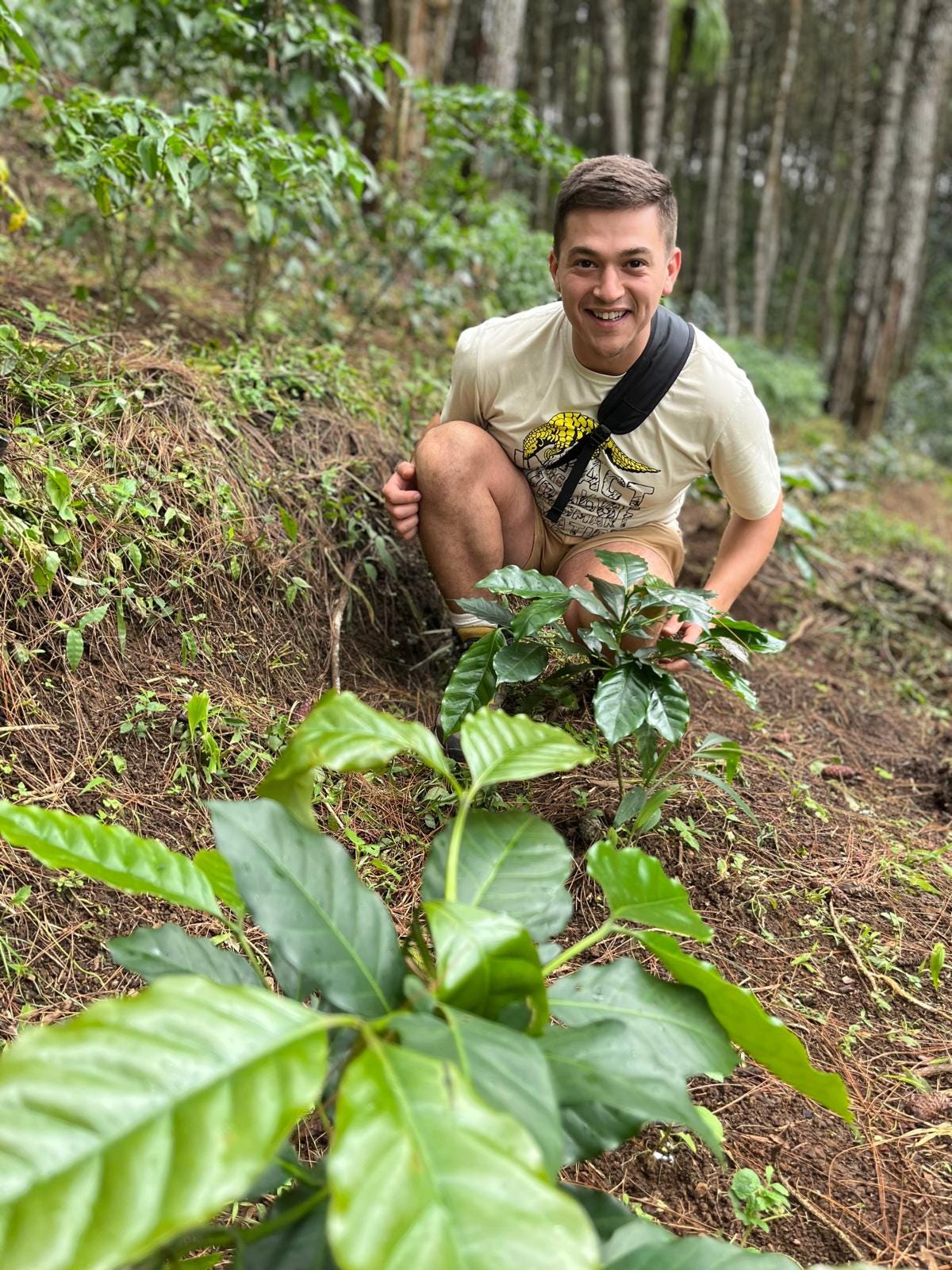
Today at Sucafina, driven by a passion to connect farmers and producers, Ari sells coffee to small roasters and works to increase the farmer’s financial share of coffee through digital tools, but his interest in coffee began at a Budapest café while studying abroad in college. During his first visit to a proper coffee shop and roastery, the owner asked him to smell the beans. It wasn’t his first experience dri, but never before had he been guided through a deeper experience with the product, and “I just got something new.” His curiosity grew, and over the next five years, he saved every bag of coffee he bought, largely from local roasters. “There was this cool map or collage of all these places I’ve lived in these local roasters that I had supported over the years. My journey is kind of saved in those bags.” Following graduation from the Italian master’s program, Ari wanted to work in a space that connected farmers, particularly smallholder farmers, and consumers. He settled on coffee, a product often consumed far away from production, because of the many small producers and global reach. What began in Yemen in the 1400s as a concentrated, close-hold ownership of coffee cultivation now has expanded to 60 countries worldwide.
Before we dive deeper into the more complicated world of coffee, it’s first important to establish a baseline knowledge of how coffee grows and the process of plant to cup. The coffee beans we’re all familiar with are actually seeds from a plant, whose two main varieties are Arabica and Robusta. The plants typically grow between 5-7 feet tall and produce a fruit called cherries. Inside these cherries are seeds, which are ultimately processed to the roasted coffee bean we know and love. Grown within 1,000 miles of either side of the equator, the coffee plant takes about 3-4 years to mature before harvest, but it typically produces fruit for 30-40 years.
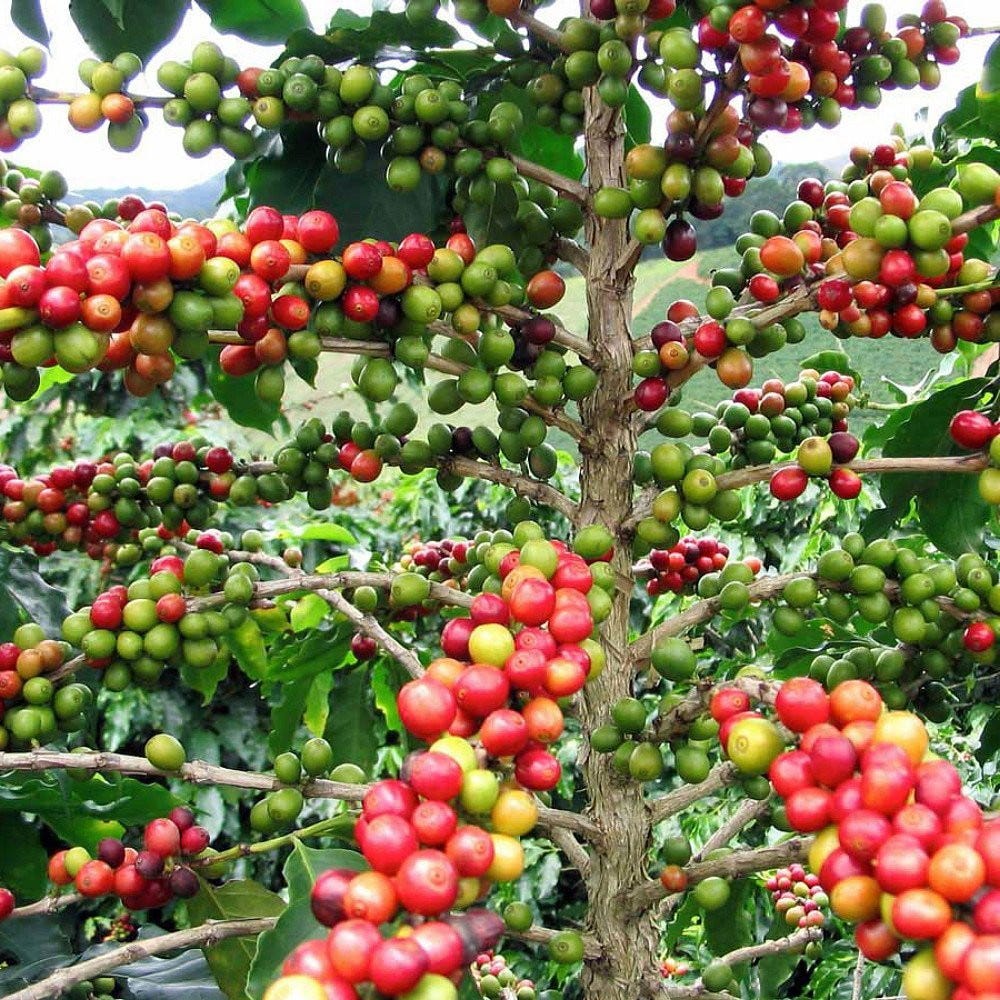
The journey coffee takes from cherry to roasted bean is a process. Ari graciously gave an overview of production, which I found extremely helpful and enlightening.
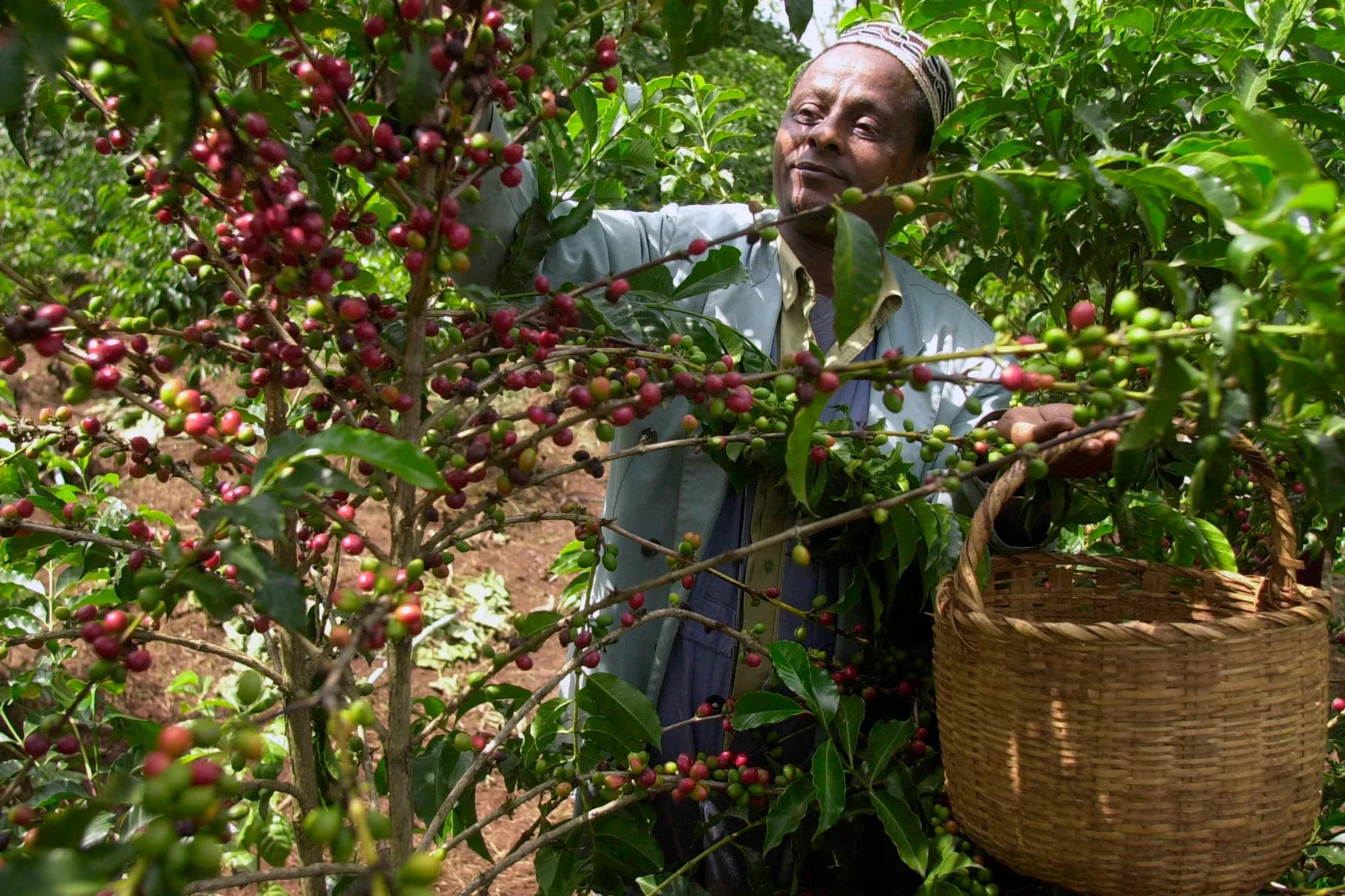
After the fruit has fully matured and the coffee cherries are ready to be picked, they are mostly harvested by hand, due to the hilly areas in which they grow. Only in certain places with flat landscapes, such as Brazil, can machines harvest the cherries. Although mechanized harvesting might seem easier and more efficient, this harvest method takes both unripe and ripe cherries at once. As Ari says, this can produce astringent flavors from underdeveloped cherries or winey or fermented flavors from the overripe cherries (not the smooth, well-balanced flavors we’re looking for). When workers harvest cherries by hand, they only pick the ripe ones for further processing, which creates higher quality beans and a more flavorful final product. Below, you’ll find a photo of a coffee cherry’s anatomy, which will be helpful to better understand the next part of the process.


After they’re picked, the cherries are transferred to either a washing station or site collector. At the washing station, cherries are placed into a large tank of water, where the pulp is washed off. Next, the cherries are sent to a tank, where they sit for 12-72 hours to ferment. This fermentation changes the seed flavor, but also loosens the mucilage, the membrane between the cherry and the seed. After fermentation, the mucilage is washed off. This entire process creates what’s known in the coffee world as washed coffee. At this stage, the cherries are then sent to a dry mill, where they run through a series of machines to break the outer shell and parchment (see image above!) from the green coffee bean. After this separation, destoner machines or people remove foreign matter and color sorters remove bad colored beans.
Most coffee is washed, but an entirely different category, natural coffee, exists where after being aggregated at a site collector, the entire cherry dries naturally in the sun (which can take up to 6 weeks). When they’re completely dry, the outer matter is removed from the fruit to access the bean, and foreign matter and bad colored beans are also subsequently removed.
Once sorted, the pure unroasted coffee bean from both washed and natural processes is called green coffee. Most companies ship the coffee from the country of origin around the world in this state because it is more shelf stable and can be kept for 8-12 months, but some companies still roast coffee prior to shipment. After arrival at its destination country, roasters roast the beans (which is an entire art and process in and of itself), and then they can be ground and consumed in a variety of ways. Below is a carousel of various photos of parchment and green coffee in various stages, provided by Ari:


For my visual learners, this video summarizes and brings you right into the process: harvest, separation, roasting, and different preparations.
Prior to this conversation, I thought I knew what made coffee production truly sustainable, but, as Ari says, coffee is “complicated.” For him, the most sustainable supply chain is when you shake the hand of the farmer. It allows you, the customer, to learn more and develop trusting relationships with the person who grows your food. A greater degree of transparency can exist and certifications don’t have to play as big of a role if you know and trust your farmer. Because coffee is only grown in specific regions of the world, far from many who consume it, the immediate connection between farmer and consumer is ten times more difficult to foster. In his opinion, this is where the role of certifications come in. “Certifications represent the third party verifier of trust.”
Particularly for products such as coffee, I assumed certifications were the gold star, an emblem that represented companies who were committed to many different important aspects of improving the food system (fair wage, minimal to no pesticide use, sustainable environmental practices, a higher percentage of the profit allocated to farmers, etc.). I saw labels like FairTrade, USDA Organic, and Rainforest Alliance as the best in the industry. Their websites are full of photos of farmers and facts about fair wages and programs that lead me to believe they’re making a real difference. But, as Ari helped me to see throughout so many points in our conversation, nuance exists, and each certification has a trade off. For example, “you could have massive scale, you could be underpaying wage laborers and have many human rights violations, and still be organic. So it’s always a reduction. It’s always looking at one component and not the whole picture. But that doesn’t mean it’s bad.” Regardless of their standards, certifications exist with their own set of barriers throughout the coffee and wider agricultural industry because some producers simply can’t afford to pay for the certification or have time to gather and submit the paperwork required. In other words, they could be organic, regenerative, and/or have strong labor standards, but simply don’t have the formal label on their product. Ari’s comments allowed me to view these certifications with a bit of skepticism, an effort to do good, but not necessarily the be all end all. That’s not to say they’re not doing good work, but his comments do shed light on how some priorities take precedence over others depending on the certification.
In terms of sustainability, some of the main issues that come up on first search are deforestation, biodiversity loss, climate change and the increasing lack of viable land for production. To demonstrate the real subtleties behind sustainability and give greater high-level context to these topics, Ari gave a favorite general example: “You have some brands that are really committed to quality and sustainability. So they’re buying from this cooperative every year, but [one year], there’s a drought. The coffee is horrible at origin, and this company, which might have really nice intentions and is committed to sustainability and quality. Suddenly, the quality falls. So what do they do? In some cases, they say ‘We’re going to look for a different supplier because we’ve committed to a quality standard.’ There’s a trade off decision of quality or sustainability that comes into play.” But at Sucafina, they sell the whole spectrum: the bad quality coffee brand, the high quality, the big companies, the small roasters. They’re able to buy from that farmer for a potentially different customer. They can still pay the producer and buy it for the customer. “And so in that way, what most consumers would consider bad quality coffee is sustainable because you’re committing to a relationship.”
Just as sustainable initiatives are often important pillars of certifications, sustainable solutions are top of mind for many companies and governments, but nuance exists. As Ari told me, in Europe, the European Union Deforestation Regulation is a big priority that requires anything imported into Europe to show proof that deforestation was not part of the supply chain. “That is a really complicated thing because on one hand, deforestation is bad. We need trees. On the other hand, it does feel like Europe is shirking the responsibility and imposing the responsibility for deforestation onto some of the poorest countries in the world after Europe has kind of won this race in development.” To show proof, one needs data. And to show data, companies like Sucafina pay for polygon mapping with satellite data. “To me, [this] is really interesting because I imagine if the law for EUDR required every politician who signed it to also submit a polygon map of their own home, it wouldn’t have gotten signed. And yet, we’re taking invasive data of farmers.”
A similar perspective can be applied to labor laws for farmers and farm-workers, who provide a large amount of manual labor in production countries. “From the perspective of European regulation, removing child labor and slave labor from all global supply chains is a really big priority, but that regulation is often nuanced. We allow 14 year olds in Iowa to work their parents farm. That’s not child labor, but when a 12 year old in Ethiopia is picking coffee cherries, it’s child labor, and they will get banned, or they will get sanctioned, or [companies won’t buy their coffee] because they’re using child labor. And there’s just a bit of an ironic double standard there of the morality of the West being pushed onto the global south formerly colonized countries.” There’s clearly room for dialogue over what defines child labor and the cultural norms surrounding it, but Ari’s example ignited personal deeper questioning of the West’s norms and solutions being imposed onto other countries.
While there’s room for dialogue and discussion over issues like deforestation and labor practices, work is being done by companies and organizations to decrease deforestation and better labor standards. For example, Ari revealed Nestlé has positively changed the landscape of rural Columbia as they help farmers transition from extractive, harmful practices to ones that produce more restorative, harmonious, resilient lands and livelihoods. In partnership with international NGO Rainforest Alliance, they’re restoring degraded forests, promoting watershed conservation, and helping farmers transition to regenerative agricultural practices, which benefit farmers, the environment, and society “by addressing the challenges of climate change, biodiversity loss, and community resilience.”
As coffee customers, we have choice over what we buy, and for a lot of us, price is a major factor. I could easily rattle off the different prices at a few of my favorite cafés, but why does a variation exist? What goes into the cost? According to Ari, three main factors: 1. The price of production 2. Trade (export & import) 3. The roasting process. Surprisingly, the roaster has the biggest margin within the supply chain. “Let’s say you’re a roaster in Europe. You’re paying for rent in Europe, you’re paying for labor in Europe, you’re paying for energy costs in Europe. [...] When you buy a cup of coffee, a huge part is trying to pay rent in the space that you bought the coffee. And that is a feature of global inequality.” In other words, the cost of doing business is currently greater in Western countries than the Global South.
Many of the countries that produce coffee were former European colonies, and those effects are still felt to this day. While colonialism and its effects are a complex issue that could be discussed in much greater detail, one of the most prominent effects is the fact that most of the profit goes to developed Western nations. “The reason you can go to a coffee shop in Europe or the US and buy a cup of coffee for $2, $3, or $5 is because someone on the other side of the world is making $1/day.” In fact, almost half of the world’s smallholder coffee producers live in poverty. Many certifications, like FairTrade or Equal Exchange, try to put a greater percentage of profit into the hands of producers, but change is slow and systems are deep and complicated.
* Note: Although those three factors simply explain the final cost, many other factors contribute, such as the coffee exchange. Two main markets, New York Arabica and London Robusta, determine the price of generic grade coffee that fluctuates daily based on a number of factors like interest rates, the level of stocks in warehouses, growth factors, and more.
For further insight into the price of coffee today, Ari explained the current “inverted” Arabica coffee market. Traditionally, “future coffee” is more expensive than present coffee because of storage and financing costs. This mitigates risk for import/export companies, but today, present coffee is more expensive than future coffee because demand exceeds supply. The market responds by incentivizing immediate sales, rather than the traditional method of holding coffee, to accelerate flow of coffee into the market, which in turn drives up the price. Who knew?!
When asked what producers are most concerned about, I assumed the response would be the changing climate and its effects on production, but given the previous statistic, Ari’s answer makes perfect sense: “I think that from the producer's perspective, it's getting paid.” He goes on: “There are many countries around the world where coffee is the largest export for the country, which means that coffee is the largest bringer of foreign currency of US dollars. If farmers are getting paid less than they were last year, they're not happy and they're concerned. And if they're getting paid more, they're happy and they're concerned.”
Wage labor is another major concern: “[In the] supply chain, we often talk only about farmers, and we don't always talk about wage labor. And in the case where it's a half hectare farm, the farmer is the labor, but in the case where it's a 200 hectare farm in Central America and South America, then the wage labor is really the most vulnerable in the supply chain. And they're often not talked about because we want to talk about the farmer and the relationship between the roaster and the farmer and how important the farmer is. That's whose picture is on the back for specialty coffee. So I want to highlight wage labor as a particularly vulnerable part of the supply chain. But I think the chief concern from the perspective of the wage labor is getting paid and not having their labor rights violated.”
Near the end of our conversation, I asked Ari if he had recommendations: were there any certifications he trusted above others? Certain brands that he thought were doing a better job? Concepts or thoughts to consider when going to buy a bag of coffee? His response, which I didn’t expect in the moment but made perfect sense in hindsight, called my questions into question. “I’m generally not super prescriptive. I don’t love telling people what to do. I like it when people go out and learn more. To me, the relationship is always going to be the top because relationship also builds empathy and understanding. And when you have that understanding of how things in the world affect the grower, you tend to have more empathy for price changes and the supply chain. So to me, that’s the crown jewel.”
Following our call, what stuck with me most was how deeply Ari valued relationships and local roasters. Determined to put his values into practice, to build relationships and knowledge, I struck up conversations with staff members at local cafés and asked where they source their beans. One reply informed me about a local roaster, so to investigate further, I took a trip to the roaster’s café.
As soon as I walked in the door, I knew I was in a special place. Freshly roasting beans wafted through the air. An entire section of the shop was dedicated to coffee materials: grinders, french presses, chemexes, filters, kettles, and more. Loved coffee books sat on a shelf. I placed my order and settled in for a morning of work. A few minutes later, my coffee was ready. As I tasted the first sip, I immediately thought, “this is the best cup of coffee I've had in a long time.” Delightfully smooth and wonderfully roasted, milk perfectly foamed… in other words, the jackpot.
Before I left, I asked one of the owners about the roasting process, where they source their beans, coffee grinder recommendations for a newbie like me, and his preferred method for at-home preparation. He graciously answered all of my questions with ease, and I left with a smile on my face: grateful for the connection I had with a producer, for the knowledge he shared, and for a great cup of coffee.
My thanks to Ari for this enlightening conversation and taking the time to talk about all things coffee!
***Disclaimer: All opinions and perspectives are those of Ari Moskowitz and do not necessarily reflect those of Sucafina. Some quotes are edited and condensed for clarity.
Sources:
Coffee Lover’s Handbook: The Complete Guide to Coffee Making
Coffee Production: NCAUSA, The Roasterie, UFIFAS
Colonialism and Coffee
Rainforest Alliance, AAA Program, Nespresso
Images: Anatomy of a Coffee Cherry, The Coffee Cherry, Coffee Cherry’s Anatomy, Coffee Plant, Hand Coffee Harvest, Ari Moskowitz - Courtesy of the Author